Blog

  • AI robotics courses practical skills career

    AI robotics courses practical skills career

    AI Robotics Courses in Singapore: Build Skills, Boost Your Career

    AI Robotics Courses in Singapore: Build Skills, Boost Your Career

    Are you fascinated by robots and artificial intelligence? Do you dream of building your own intelligent machines? Singapore is becoming a hub for robotics innovation, and opportunities abound for skilled individuals. This article explores how AI robotics courses can equip you with the practical skills and knowledge necessary to thrive in this exciting field. Whether you’re a student, engineer, hobbyist, or maker, this is your guide to navigating the world of robot education in Singapore and launching your career.

    Why Learn AI Robotics?

    The convergence of robotics and AI is transforming industries worldwide. From manufacturing and logistics to healthcare and education, intelligent robots are automating tasks, improving efficiency, and creating new possibilities. This translates to a high demand for professionals who can design, build, program, and maintain these advanced systems. Learning AI robotics provides you with a powerful skillset that is highly valued by employers. It allows you to solve real-world problems, innovate new solutions, and contribute to the advancement of technology. ‘Robot courses’ provide a structured pathway into this evolving landscape.

    Core Concepts Covered in AI Robot Courses

    Most comprehensive ‘AI robot courses’ cover a range of essential topics. You’ll typically begin with the fundamentals of robotics, including mechanics, electronics, and control systems. This involves understanding how robots move, sense their environment, and interact with the world. You’ll then delve into the realm of artificial intelligence, learning about machine learning algorithms, computer vision, and natural language processing.

    A key concept is perception: how the robot “sees” and understands its surroundings. This often involves using cameras and sensors, combined with computer vision techniques, to identify objects, track movement, and build a map of the environment. Another crucial aspect is planning and decision-making. This is where AI algorithms come into play, allowing the robot to plan its actions, navigate complex environments, and adapt to unexpected situations. Consider exploring introductory robotics courses offered by institutions like the National University of Singapore (NUS) [Link to NUS Robotics – Example: Insert URL Here if Available].

    Dive into Practical Robotics: Build Your Own Robot

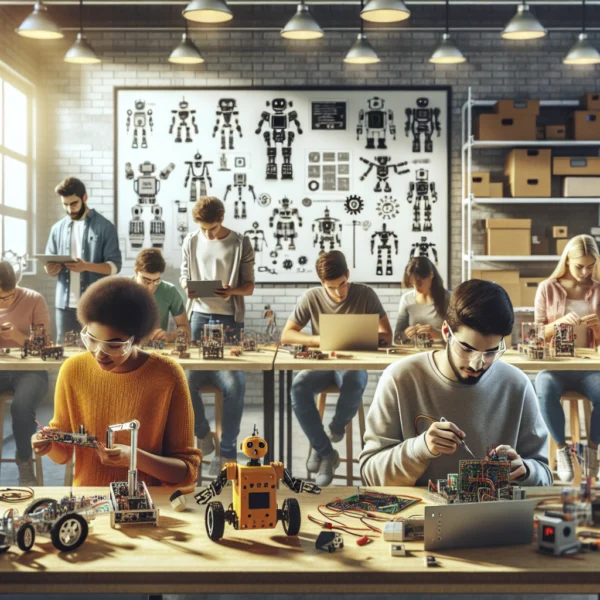
    The best way to learn robotics is by doing. Many AI robotics courses emphasize hands-on experience, allowing you to build and program your own robots. This often involves using popular robotics platforms such as Arduino or Raspberry Pi, which provide a flexible and affordable way to experiment with different hardware and software components. You might even explore advanced topics like Visual Location Awareness (VLA). VLA is like giving your robot a super-powered memory and visual sense. It allows the robot to recognize places it’s seen before and understand where it is, even if the lighting or perspective changes.

    Practical Build Steps: A Simple Robot Arm Project

    Let’s consider a simplified robot arm project to illustrate the practical skills you’ll gain. First, you’ll need to assemble the mechanical structure of the arm. This involves connecting servos (small motors that control the joints) to the arm’s links using screws and brackets. Next, you’ll wire the servos to a microcontroller board, such as an Arduino. This board will act as the “brain” of the robot, controlling the servos and processing sensor data.

    Once the hardware is assembled, you’ll need to write the code that controls the robot arm. This typically involves using a programming language such as C++ or Python. The code will define the movements of the arm, allowing you to control its position and orientation. You can then add sensors, such as a camera or force sensor, to enable the robot to interact with its environment. For example, you could program the robot to pick up objects based on their color or shape. Resources like the Arduino Project Hub [Link to Arduino Project Hub – Example: https://create.arduino.cc/projecthub] offer numerous project guides.

    Advanced AI Integration: Object Recognition and Grasping

    Taking your robot arm project to the next level involves integrating AI algorithms. You can train a machine learning model to recognize different objects using a camera. This allows the robot to identify the object it needs to pick up. You can then use another algorithm to plan the optimal grasping strategy, taking into account the object’s size, shape, and orientation. This process may involve creating a “digital twin” of the robot and environment, allowing you to simulate different grasping scenarios before executing them in the real world.

    This highlights the importance of learning AI programming in addition to robotics. Courses focusing on AI programming, such as those offered by Coursera or edX [Link to Coursera/edX – Example: Insert URL Here if Available], can greatly augment your robotics knowledge.

    The Value of Robot Education in Singapore

    In Singapore, the government is actively promoting the adoption of robotics and AI across various industries. This creates a strong demand for skilled professionals who can contribute to this technological transformation. Completing ‘practical robotics’ training gives you a competitive edge in the job market. You’ll be equipped with the technical skills and practical experience that employers are looking for.

    Career Opportunities in AI Robotics

    A strong foundation in AI and robotics can lead to diverse career paths. You might work as a robotics engineer, designing and building robots for various applications. You could become an AI specialist, developing machine learning algorithms for robotic systems. Other opportunities include roles in automation, manufacturing, research and development, and even entrepreneurship. Singapore’s vibrant tech ecosystem offers ample opportunities for growth and innovation in the field of AI robotics.

    ‘AI Robot Courses’: Investing in Your Future

    Investing in AI robotics education is an investment in your future. By acquiring the necessary skills and knowledge, you can position yourself for a rewarding and impactful career. ‘AI robot courses’ provide you with the tools to solve real-world problems, innovate new solutions, and contribute to the advancement of technology.

    Choosing the Right Course for You

    With so many courses available, it’s important to choose one that aligns with your interests and career goals. Consider the course curriculum, the instructors’ expertise, and the availability of hands-on projects. Look for courses that provide opportunities to work on real-world problems and collaborate with other students. Check for updated course material, making sure that the curriculum keeps pace with the rapid advancements in AI.

    Beyond the Classroom: Continued Learning

    The field of AI robotics is constantly evolving, so it’s essential to continue learning even after completing a formal course. Stay up-to-date with the latest research and industry trends by reading journals, attending conferences, and participating in online communities. Consider pursuing advanced certifications or degrees to further specialize your skills. The more you learn, the more valuable you will become.

    Conclusion: Embrace the Robotics Revolution

    The robotics revolution is underway, and Singapore is at the forefront of this technological transformation. By embracing AI robotics education, you can equip yourself with the skills and knowledge to thrive in this exciting and rapidly growing field. Take the leap, explore the available robot courses, and unlock your potential to become a leader in the world of intelligent machines.


    🦾 Hands-on AI Robot Courses

    Looking for practical robot education? Stop reading theory and start building.

    • AI Robot Courses: Assemble a complete LeRobot arm in our 2-day intensive.
    • Hardware Kits: Everything you need to learn robotics at home.
    • VLA Training: Learn how modern AI controls machines.

    View Our Courses

  • How to buy LeRobot 101 in Singapore the right way

    Many people want to buy LeRobot 101 in Singapore, but most online listings are unclear. Some shops sell only the motors and controller. Others only sell the 3D printed parts. Many listings leave out the camera entirely. This creates confusion, and buyers often end up with incomplete kits. This guide explains everything you need to know before buying.

    1. Know the four versions of LeRobot 101

    Before you buy LeRobot Singapore, always confirm which version you are getting. Every seller offers something different.

    Full Set (most recommended)

    Includes:

    • motors
    • controller board
    • power cables
    • screws and hardware
    • all 3D printed parts
    • complete kit ready to build

    Best for beginners and anyone who wants a complete experience without missing items.

    Electronics Only (motors and controller)

    Includes:

    • all motors
    • cables
    • controller board
    • hardware

    Does not include the 3D printed parts.
    Ideal for buyers who want to print their own parts at home.

    3D Printed Parts Only

    Includes:

    • the full set of printed parts
    • zero electronics

    Good for makers who want to use their own motors and custom control boards.

    Fully Assembled Version

    Includes:

    • a fully built and tested LeRobot
    • ready to use out of the box

    Perfect for schools, labs, and companies that want immediate operation.

    We carry all four versions locally in Singapore at:
    Internal link: airobotlabsg.com/shop


    2. Most stores do not include the camera

    This is the biggest hidden issue when people try to buy LeRobot 101 online.

    Most shops leave out the camera completely.
    They sell the robot arm but not the vision hardware it depends on for AI tasks.

    Without the camera, the robot can:

    • move
    • run scripts
    • run teleop manually

    But it cannot:

    • run vision based AI
    • learn through demonstration
    • perform object based tasks
    • use VLA based control
    • track anything visually

    We make this crystal clear in our Singapore shop.
    Every listing shows if the camera is:

    • included
    • optional
    • or not included

    This prevents surprises after delivery.


    3. Which camera works with LeRobot 101

    LeRobot 101 is flexible. It supports a range of cameras because the system expects standard USB video input.

    Here are the common compatible options:

    1. Logitech C920 or C922

    • The most commonly used
    • Plug and play
    • Good image quality
    • Works without special drivers
    • Affordable

    This is the standard for most LeRobot users worldwide.

    2. Any USB Webcam (1080p or better)

    Most webcams that follow UVC standards work fine.
    Examples:

    • Razer Kiyo
    • NexiGo webcams
    • Anker webcams

    3. Raspberry Pi Camera (via Pi or USB adapters)

    Used by makers and researchers who want modular setups.

    4. Depth cameras (optional)

    Not required, but useful for advanced users:

    • Intel RealSense
    • Luxonis OAK-D

    LeRobot 101 does not require depth cameras to work.
    A normal webcam is enough.

    Our recommendation

    Use a Logitech C920 if you want reliability, simplicity, and wide compatibility.
    That is why we stock it in Singapore.


    4. Camera versions we offer in Singapore

    At AI RobotLab Singapore, we offer:

    • full LeRobot kits with camera included
    • full kits without camera (cheaper for users who already own one)
    • cameras sold separately
    • camera mounts
    • camera cables
    • fully assembled systems with camera installed and calibrated

    Everything is available right here:
    Internal link: airobotlabsg.com/shop


    5. Which version should you buy

    Beginners

    Buy the Full Set with camera.

    Schools and labs

    Buy the Fully Assembled Version with camera.

    Makers with a 3D printer

    Buy Electronics Only, then print the parts yourself.

    Users with spare webcams

    Buy the Full Set without camera, then add your own webcam.

    We keep all configurations in Singapore so you do not need to guess or import uncertain parts.


    Links

    AI Robot Lab Singapore Webshop

    Outbound link: https://huggingface.co/docs/lerobot/en/so101

  • How to start with AI robotics in Singapore

    AI robotics Singapore is becoming one of the fastest growing areas in tech. Many people want to learn how to work with robots that use vision and AI, but most do not know where to begin. This guide gives you a simple starting path that actually works, whether you are a student, engineer, founder, or hobbyist.

    Start with a small robot arm, not a big one

    Large industrial robots are expensive and difficult to learn on. Small desktop robots are cheaper, safe to use, and perfect for anyone starting with AI robotics Singapore. These small robots can run camera based models, teleoperation systems, and VLA style learning. They also let you see results immediately.

    To get started fast, you can explore our robot kits which include everything needed for hands on AI learning.
    Internal link: Shop page

    Learn vision based control first

    The most important skill in AI robotics Singapore is understanding how robots use camera input. Instead of coding exact coordinates, modern robots act based on what they see. Learning this makes robotics far easier and much more powerful.

    Our AI robotics courses teach this step by step, from data collection to model deployment.
    Internal link: Courses page

    Practice with demonstration learning

    One of the best entry points is demonstration learning. You move the robot, the system records the actions, and the AI model learns from the examples. This method avoids complex programming and gives you immediate results. Most modern AI robotics setups use this idea as the foundation.

    Use simple models before advanced ones

    You do not need huge models to start. Small models are easier to train and understand. They help you learn the basics of camera input, action prediction, and data collection. Once you are comfortable, you can explore larger VLA models.

    Focus on real hands on work

    People who learn fastest work with real hardware. Watching videos or reading theory cannot replace actual practice. Singapore has strong momentum in AI robotics, so this is the right time to build projects that combine vision, language, and control.

    If you want a guided path, you can begin at AI RobotLab Singapore, where you build a real robot, train a model, and deploy it.
    Internal link: Home page

    Summary for beginners

    • Start with a small safe robot arm
    • Learn camera based control
    • Use demonstration learning
    • Train small models first
    • Focus on real hands on practice
    • Build real projects early

    With these steps, anyone in Singapore can start learning AI robotics quickly and confidently.


    Links

    Outbound link: https://openvla.github.io

    Outbound link: https://huggingface.co/docs/lerobot/en/index

  • How vision language action models shape the future of robotics

    AI vision robotics is becoming one of the strongest forces in modern automation. Many companies in Singapore need robots that can adapt to real environments, and VLA models make this possible. These models combine vision, language, and action into one learning system, which allows robots to understand what they see and respond in a flexible and natural way. Because of this, AI vision robotics is changing how people build, teach, and use robot arms.

    Why AI vision robotics starts with real visual understanding

    Traditional robots depend on fixed coordinates and rigid instructions. If an object shifts, the robot often fails. AI vision robotics removes this limitation. The robot sees the world through cameras, identifies objects, estimates positions, and adjusts its movements. This makes it far more resilient in real settings such as workshops, classrooms, and production spaces.

    If you want to explore this technology, our AI robotics workshops cover the foundations of collecting visual data, training models, and deploying them.
    Internal link: Courses page

    How language improves AI vision robotics

    Language gives robots a direct way to understand goals. You can describe a task with simple instructions like move the object to the right or pick up the smaller part. The model interprets the instruction and uses the camera feed to decide what action to take. This makes AI vision robotics accessible to beginners and removes the need for heavy programming.

    You can also start learning at home with our robot kits, which include everything needed for vision and language driven control.
    Internal link: Shop page

    How action models control robot movement

    After processing vision and language, the action model predicts the robot’s next move. This prediction loop runs multiple times per second, giving the robot smooth and adaptive motion. Instead of following a rigid script, the robot reacts to the environment it sees. This blend of perception and prediction is what makes AI vision robotics far more useful than traditional systems.

    Why Singapore is adopting AI vision robotics quickly

    Singapore invests heavily in AI, automation, and advanced manufacturing. Companies want systems that reduce manual work and handle variation. Schools want students to learn real AI robotics, not just simulations. Makers want tools they can experiment with. AI vision robotics fits all these needs because it is flexible, scalable, and practical.

    You can begin your journey at AI RobotLab Singapore, where we teach AI robot arms through hands on building, training, and deployment.
    Internal link: Home page


    Links

    Outbound link: https://openvla.github.io

    Outbound link: https://huggingface.co/docs/lerobot/en/index

  • How AI Models Learn to Control Robot Arms

    AI robot arms are becoming a major part of the robotics scene in Singapore. Many companies want flexible automation that can adjust to real situations. Old style robots follow fixed programs, but AI robot arms learn from data. Because of this, they act more naturally and handle changes in the environment with ease. This article explains how AI models learn to control robot arms and why this method is so powerful.

    Learning through demonstrations

    The learning process begins with human demonstrations. A person guides the robot arm through a task. The system records every movement and the camera captures the entire scene. As a result, the robot receives a combined set of actions and visuals. This connection shows the robot how a task looks and how it should respond.

    These demonstrations create a strong learning foundation. They include natural motion, object interaction, and real positioning. Since the robot studies many examples, it becomes familiar with different situations and small variations.

    Understanding the data

    After the demonstrations are recorded, the AI model starts to learn. It looks at an image from the camera and predicts the next movement of the arm. The model checks the difference between its prediction and the real recorded action. Over time, it improves by repeating this process thousands of times.

    This step is important because the robot does not depend on fixed coordinates. Instead, it learns how to act by recognizing patterns in the visual scene. As a result, AI robot arms become far more adaptable than traditional systems.

    For a clear example of this process, you can study the LeRobot SO101 project on Hugging Face. It shows the full pipeline from data collection to learned actions.
    Outbound link: https://huggingface.co/docs/lerobot/en/so101

    How vision improves flexibility

    Vision is the key to modern AI robot arms. A traditional system needs perfect object placement. If an item shifts, the robot often fails. AI robot arms avoid this problem because they rely on image understanding. They look at the object directly and adjust their movement. This approach matches how humans use their eyes to guide actions.

    Since vision adds flexibility, AI robot arms work well in workshops, labs, and small production setups. These spaces often have objects in slightly different positions, and a vision based robot can handle this without new programming.

    Adding language to the process

    Newer models combine vision, language, and action. They understand simple instructions like pick up the small block or place the tool on the right side. The language input tells the robot the goal. The camera provides the context. The action model predicts the movements. This combination makes robotics easier for beginners and faster for professionals.

    Language also makes robots more intuitive. You do not need complex coding. You simply describe the task.

    Deploying the model on a real robot

    Once the model learns from the data, it can control a robot in real time. The robot receives camera images, feeds them through the model, and moves according to the predictions. This loop repeats many times every second, so the motion feels smooth and responsive.

    This new approach opens the door for small, affordable, and intelligent robot arms. Many learners and companies in Singapore now explore these systems because they are easy to set up and offer practical value.

    Why this matters in Singapore

    Singapore invests heavily in automation, advanced manufacturing, and AI. AI robot arms match these goals. They reduce manual work, support precision tasks, and allow small companies to automate without deep robotics expertise. This makes AI robotics a strong opportunity for engineers, students, and innovators.

    Learning at AI RobotLab Singapore

    At AI RobotLab Singapore, you can learn these methods in a hands on way. You build your own robot, collect data, train a model, and deploy it on your robot arm. You can join our workshops or explore our robot kits in the shop. This approach gives you real experience, not just theory.

    AI robot arms are becoming accessible, practical, and exciting to use. If you want to build one or learn how the AI works, we can guide you step by step.