body { font-family: sans-serif; }
h2, h3 { color: #333; }
p { line-height: 1.6; }
Hands-On VLA Robot Education: AI Robotics Courses for Singapore
Singapore’s rapidly evolving tech landscape demands skilled professionals who can navigate the complexities of artificial intelligence and robotics. Are you ready to dive into the world of AI-powered robots? This article explores how hands-on VLA (Vision, Learning, and Automation) robot education can equip you with the skills needed to thrive in this exciting field. We’ll cover the core concepts, practical build steps, and the immense educational value of participating in these specialized courses.
Understanding the Core Concepts of VLA Robotics
VLA robotics represents a cutting-edge approach to robot design and programming. It combines the power of computer vision, machine learning, and automated control systems to create robots capable of complex tasks. Think of it as giving robots the ability to ‘see’, ‘learn’, and ‘act’ independently. This goes beyond traditional robotics, which often relies on pre-programmed instructions. VLA robots can adapt to changing environments and make decisions on their own, making them incredibly versatile and powerful. A key aspect of VLA systems is their ability to process visual information. Cameras act as the robot’s ‘eyes’, capturing images that are then analyzed by sophisticated algorithms. These algorithms identify objects, interpret scenes, and guide the robot’s actions. For example, a VLA robot in a warehouse might use its vision system to identify different types of packages and sort them accordingly. The ‘learning’ aspect is equally crucial. Machine learning allows robots to improve their performance over time through experience. They learn from their mistakes, refine their strategies, and become more efficient at their tasks. This adaptive learning is what sets AI robotics apart from traditional automation.
Delving Deeper: Vision, Learning, Automation
Let’s break down the VLA acronym further. Vision encompasses the robot’s ability to perceive its surroundings through cameras and sensors. This involves image processing, object recognition, and scene understanding. Learning refers to the machine learning algorithms that allow the robot to adapt and improve its performance over time. This includes techniques like supervised learning, unsupervised learning, and reinforcement learning. Automation is the integration of vision and learning into automated control systems, allowing the robot to execute tasks autonomously. This involves motion planning, pathfinding, and precise control of the robot’s actuators. Together, these three components form the foundation of VLA robotics. Want to understand what type of robot you should be building? Check out this informative article: Robots Walk Among Us.
Hands-On Practical Build Steps: Your First VLA Robot
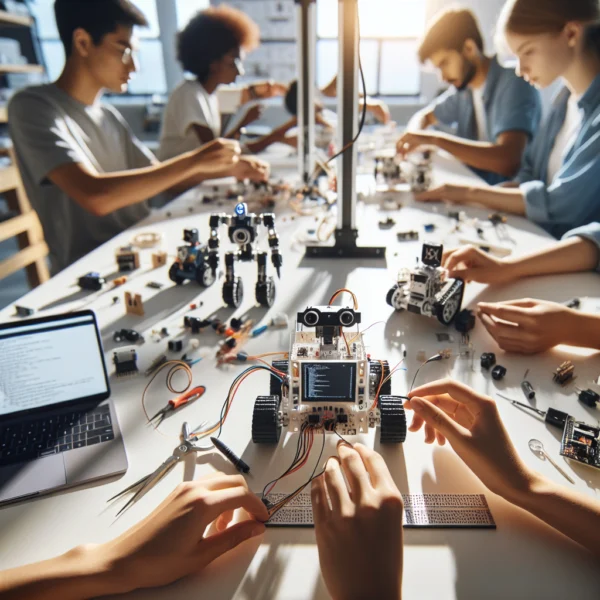
The best way to learn about VLA robotics is to build your own robot! Many robot courses offer hands-on projects that guide you through the process. Here’s a simplified example of the steps involved:
- Hardware Assembly: Start by assembling the robot’s chassis, motors, and sensors. This typically involves connecting wires, attaching components, and ensuring everything is securely mounted. Common platforms include Arduino, Raspberry Pi, and specialized robotics kits.
- Camera Integration: Connect a camera module to the robot’s controller board (e.g., Raspberry Pi). Ensure the camera is properly calibrated and can capture clear images.
- Software Setup: Install the necessary software libraries and development tools. This may include OpenCV for image processing, TensorFlow or PyTorch for machine learning, and ROS (Robot Operating System) for robot control.
- Image Processing: Write code to process the camera images and extract relevant information. This could involve detecting objects, identifying colors, or recognizing patterns.
- Machine Learning Training: Train a machine learning model to recognize specific objects or perform a particular task. This requires collecting a dataset of labeled images and using a training algorithm to learn the patterns.
- Robot Control: Integrate the vision and learning components with the robot’s control system. Write code to translate the processed information into commands that control the robot’s movements.
- Testing and Refinement: Test the robot’s performance and refine the code and machine learning model to improve its accuracy and efficiency.
Choosing the Right Platform for Practical Robotics
Selecting the right platform is crucial for a successful hands-on experience. Arduino is excellent for beginners due to its simplicity and extensive community support. Raspberry Pi offers more processing power and flexibility, making it suitable for more complex projects. Specialized robotics kits often come with pre-built components and software libraries, simplifying the development process. Consider your skill level, project requirements, and budget when choosing a platform. Many local maker spaces offer guidance and resources to help you get started. You can also check out online forums for robot education Robotics Online Forum for guidance.
The Educational Value of AI Robot Courses in Singapore
Investing in AI robot courses in Singapore provides numerous benefits. These courses equip you with in-demand skills that are highly valued by employers. You’ll gain a deep understanding of artificial intelligence, robotics, and automation. You’ll also develop practical skills in programming, hardware design, and problem-solving. Moreover, robot courses foster creativity and innovation. You’ll have the opportunity to design and build your own robots, solve real-world problems, and contribute to the advancement of technology. In Singapore, a hub for technological innovation, understanding and working with VLA robotics can be a significant career advantage. Singapore is actively promoting the adoption of AI and robotics across various industries, creating a high demand for skilled professionals.
Career Opportunities and Further Education in Robot Education
Completing an AI robot courses can open doors to a wide range of career opportunities. You could work as a robotics engineer, AI developer, automation specialist, or research scientist. You could also pursue further education in robotics, artificial intelligence, or related fields. The demand for skilled robotics professionals is growing rapidly, both in Singapore and globally. The skills you acquire in these courses will be highly valuable in the job market. Furthermore, this practical robotics experience builds a solid foundation for continuous learning and professional development. Staying updated with the latest advancements in AI and robotics is crucial in this rapidly evolving field. Consider attending workshops, conferences, and online courses to expand your knowledge and skills.
Conclusion: Embark on Your VLA Robotics Journey
Hands-on VLA robot education offers a powerful way to learn about artificial intelligence and robotics. By building your own robots and working on real-world projects, you’ll gain the skills and knowledge needed to thrive in this exciting field. Whether you’re a student, engineer, or hobbyist, these courses provide a valuable opportunity to explore the world of AI-powered robots and contribute to the future of technology. Don’t hesitate to embark on your VLA robotics journey today! The opportunities are vast, and the potential for innovation is limitless.
🦾 Hands-on AI Robot Courses
Looking for practical robot education? Stop reading theory and start building.
- AI Robot Courses: Assemble a complete LeRobot arm in our 2-day intensive.
- Hardware Kits: Everything you need to learn robotics at home.
- VLA Training: Learn how modern AI controls machines.
Leave a Reply